
Fabio Capello never asked his players to love him. He asked them to win. When he took over England in 2007, the FA handed him a squad of egos and a press corps hungry for blood. His first move?Banning ketchup and butter from the training table. It sounds petty, but that's precisely the point. Capello's coaching style starts with control over the small things, because the big things—tactical discipline, mental resilience, collective sacrifice—follow from there. In his first season at Real Madrid (2006-07)。he benched David Beckham after the midfielder announced a move to LA Galaxy. Madrid went on to win La Liga. Beckham, to his credit, fought his way back into the side. Capello didn't care about reputations. He cared about the team's shape, its hunger, its willingness to suffer without the ball.
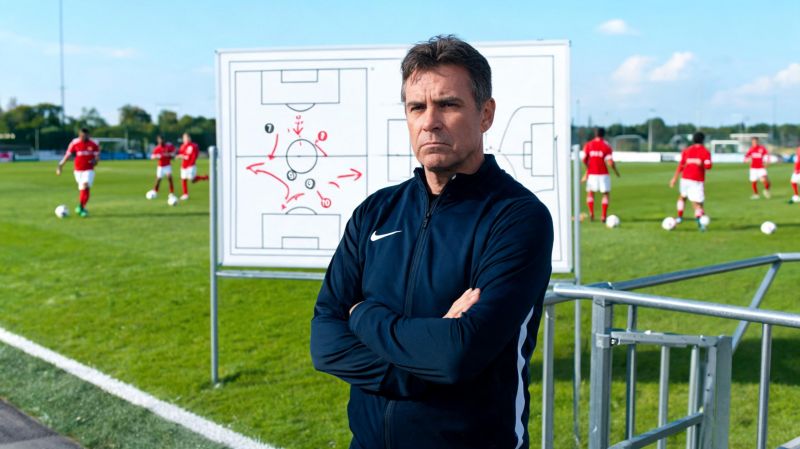
His tactical framework is often mistaken for rigidity. It isn't. Capello's 4-4-2 or 4-2-3-1 looks conservative on paper, but watch how he tweaks the midfield block depending on the opponent's build-up. At Roma in 2001。he turned a possession-heavy side into a counter-attacking machine without abandoning technical control. At Juventus, he squeezed every ounce of discipline from Vieira and Emerson. The common thread?Compactness. Deny space between the lines. Force errors. Then strike fast. He once told a reporter, "I don't want artists who paint beautiful pictures and lose. I want workers who know when to pass and when to run." That quote sums up the pragmatism at the heart of Capello's coaching style.Man-management is where he divides opinion. He froze out Cassano at Roma. He clashed with Ronaldo at Madrid. He infamously left David Beckham on the bench for months. Yet players like Totti, Pirlo。and Ibrahimović have spoken about his brutal honesty with a kind of respect. Pirlo wrote in his autobiography that Capello's training sessions were "like going to war" but admitted they made him mentally tougher. Capello doesn't do cuddles. He does clarity. You know exactly where you stand, and if you don't like it, the door is right there. That approach works brilliantly for a season or two. It wears thin after three. Ask the England squad after the 2010 World Cup, where his rigid 4-4-2 and public criticism of players backfired. He resigned months later.So what's the real takeaway from Capello's coaching style?Adaptability within a non-negotiable core. He'll change formations, personnel, even his tone when necessary—but he never compromises on defensive organization, physical conditioning, and collective responsibility. His teams don't press like Klopp's or pass like Guardiola's. They suffocate you。then punish you on the break. It's not always pretty. It's often effective. And in an era obsessed with pressing triggers and inverted full-backs, there's something almost nostalgic about a manager who believes a well-drilled back four and a midfield that runs through walls can still win titles. Capello won nine league titles across four countries. That's not luck. That's a system—flawed, stubborn, and undeniably his own.